

Due to mechanical issues, we have issued a BOIL WATER ADVISORY until further notice.
Any individual interested in volunteering to serve as a Water Advisor should contact the Town Clerk with any questions and submit a written Letter of Interest to the Town Clerk no later than 5:00PM on Tuesday, March 3, 2026.

COLCHESTER - After more than a year of meetings, surveys and public workshops, the town of Colchester formally introduced its new comprehensive plan Wednesday night, March 4, setting in motion the legal steps required before adoption and scheduling a public hearing for April 1.
Colleen Griffith presented what she described as a “quick overview” of the plan’s development, tracing its origins to the town’s first comprehensive plan in 2003 and a 2014 review that resulted in no changes.
In January 2024, she said, the state Department of Environmental Conservation announced grant funding for Adirondack and Catskill Park municipalities. Of 55 applicants, 48 were awarded grants. In May 2024, Colchester accepted a $91,000 award to update its plan.
By June, the town had formed a Smart Growth Comprehensive Planning Committee, which met monthly, conducted surveys and held public meetings. In February 2025, the town mailed invitations to 2,000 residents encouraging participation. Youth surveys and meetings with local departments, the Historical Society and the Chamber of Commerce followed.
The document now before the board is the “final draft,” Griffith said.
She outlined the plan’s structure: demographic data, key “blueprints” summarizing major issues, and orange-highlighted sections listing goals and recommendations. The plan includes a newly developed vision statement describing Colchester as a town “united by the hardworking, neighborly residents,” strengthened by its agricultural heritage and natural and historic resources.
Among the central themes:
• Historic Preservation. Founded in 1792, Colchester has significant historic assets. Griffith said the plan recommends identifying and educating property owners about historic buildings to prevent further losses. “I was just saddened recently to have the Corbett store lost,” she said. “It’s a shame to see.”
• Land Use. With 31% of its land classified as wild forest or conserved, Griffith said the town is not positioned for large-scale development. “We’re not going to make a small city here,” she said, emphasizing preservation and strategic use of buildable land.
• Infrastructure and Capital Facilities. The plan addresses water districts, potential sewer service, broadband, cellular coverage, emergency services and renewable energy.
• Rural and Agricultural Support. The document prioritizes small farms and agriculture-related businesses as economic drivers consistent with the town’s heritage.
• Environmental Protection and Climate Resilience. Griffith noted that Colchester’s most significant climate threat is flooding. “Two thousand buildings in Colchester are in a flood zone,” she said, underscoring the need for culvert upgrades and stream-based road protection.
• Housing and Wellbeing. With an aging housing stock, the plan recommends continued use of Community Development Block Grants and considers accessory dwelling units. Survey responses also called for more social and educational opportunities.
Griffith stressed that the document does not obligate funding or mandate specific projects. “It’s a living document,” she said, describing it as a framework that future boards may amend as priorities evolve.
Shelly Johnson-Bennett of the Delaware County Planning Department outlined the legal steps required before adoption. Because a comprehensive plan forms the legal foundation for future land-use laws, it is considered a “type one action” under the State Environmental Quality Review Act. That designation requires coordinated review among involved and interested agencies.
“The comprehensive plan actually does have legal foundation for your local laws for land use compliance,” Johnson-Bennett said, explaining that agencies will have 30 days to comment once notified. After environmental review and a required referral to the county planning board under General Municipal Law Section 239, the town may proceed to adoption.
Johnson-Bennett praised the process.
“The public participation this time... has been amazing,” she said. “I think your plan is very, very reflective of your community.”
Council members passed a resolution declaring its intent to serve as lead agency for the environmental review and authorized the county planning department to coordinate required filings.
Trustees then voted to hold a public hearing on the comprehensive plan April 1 at 5 p.m., prior to the regularly scheduled town board meeting.
By Lillian Browne, Walton Reporter

Town of Colchester and Delaware County Health Department will conduct a FREE RABIES CLINIC
on MARCH 18, 2026 4:30 pm to 6:30 pm.
at Colchester Highway Building, 6292 River Road, Downsville, NY 13755


You can read the "DRAFT" Comprehensive Plan online.
Go go: Departments/Planning/Smart Growth Committee
2025 Plan Part 1 & 2
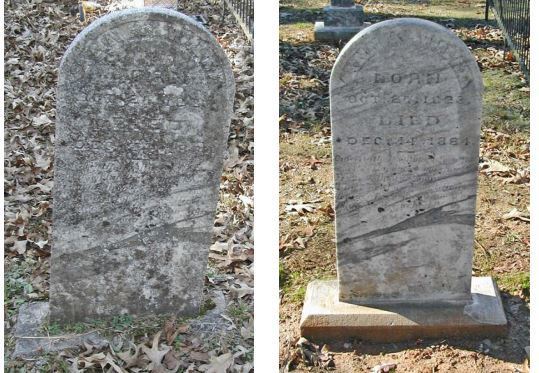
DOWNSVILLE - In a town stitched together by 18th- and 19th-century burying grounds, Colchester’s cemeteries are both archive and altar - repositories of family lore, veterans’ service and settlement-era history. But their paper maps and weather-beaten stones are showing their age.
“It really needs an update,” said Colchester Historian Kay Parisi Hampel, describing a long-ago mapping effort, “and would be helpful for us, because a lot of the older cemeteries the stones have are disintegrating and not readable. It’d be nice to have a map of where the graves were.”
Parisi Hampel, who has spent the past year compiling and verifying burial data, says the town’s burial landscape is broader than many realize. “There’s at least 12, and I think maybe a couple of other small ones that they [town crews] take care of - 14 sounds right.” Her running inventory ranges from the Old Covered Bridge Cemetery - dated 1736 - to family plots like Phelps Cemetery (1788) above Gregorytown, to Wilson Hollow (first burial 1841), Telford Hollow (nine graves, one Civil War veteran), Long Flats Cemetery on state Route 30 (where two Revolutionary War veterans - Abraham Sprague and Elijah Thomas) are buried) and community grounds at Horton, Cooks Falls, Baxter Mountain and Gregorytown (laid out 1855).
That historical rescue is now visible at the Old Covered Bridge Cemetery, where three Revolutionary War veterans’ stones - William Holliday, William Horton and Nathan Elwood - were straightened and reset, and a fourth, Enoch Knapp, received a new brownstone marker after his original one disintegrated. The work, by stone carver Michael A. Angelicola of Bristol, Conn., was funded by a Delaware County Historical Association grant; veteran markers and flags will follow. Hampel said Angelicola also made repairs at cemeteries in Pepacton, Delhi, Bovina and Partridge Island under the same grant initiative.
Even as restorations advance, officials are confronting a more prosaic problem: the reliability of the maps that direct crews to open graves. At an Oct. 1 town council meeting, a resident asked whether Colchester had charts comparable to those used in nearby Beaver Kill Cemetery. The answer: yes - and no.
“We have multiple,” Supervisor Art Merrill said of cemetery maps, “and they need to be verified for what’s already been done.” He added, “They aren’t all complete, and they aren’t all accurate. Because sometimes… when the cemetery crew was up to do a burial, they find something there already. So we’re trying to get the maps more accurate. So that doesn’t happen.”
Inconsistencies, Merrill said, often trace back to years of handoffs and hand-drawn grids: “Sometimes I think they misread east from west or right from left… Those kinds of things. We’re trying to verify all that for the future.”
Parisi Hampel has a historian’s diagnosis for how things went sideways. “Before it became more consolidated and having a centralized town halls,” she said, “records were kept in people’s houses… so some of the records were lost as a person died… and they were cleaned out and thrown away.” She called the state’s push to digitize local records “helpful for the future, so that these mistakes don’t happen.”
Parisi Hampbel is pairing research with hands-on teaching. On Oct. 18–19, Colchester Historical Society will host a stone-wall building workshop at the Old Covered Bridge Cemetery, off Bridge Street, led by mason Pat Ryan. “We’re trying to involve students from the school,” Hampel said. Participants will learn the history and craft of dry stone and help restore about 30 feet of a collapsing wall near the flagpole. “We can use a few more people,” she added; Colchester residents are not charged a fee, and those from outside town are asked for a free-will donation. Volunteers should bring work boots, gloves, safety glasses—and, if they have them, a stone hammer or small level. To register call Parisi Hampel at 607-363-7303.
Parisi Hampel is also working with students on careful, approved cleaning methods for historic stones and on why it matters.
“Sometimes gravestones are the only record that the person existed,” she said. The documentation aids families, genealogists and applicants to lineage societies. It also revives public memory. “Paige Cemetery was considered a garden cemetery when it was laid out,” she noted - meant for walking, contemplation and paying respects.
Her hope is simple and durable: “I hope that we would continue to keep good care of our cemeteries… out of respect for our past generations,” she said. “Younger generations [should] learn of the importance and the value of having cemeteries that are well kept, and that memories can be reserved and history can be preserved.”
The Reporter, Lillian Browne

Reminder!! The Town Board has a Sidewalk Ordinance which states: Snow and Ice shall be removed from sidewalks within twelve hours after the snow has stopped falling. Please help keep our sidewalks clean of snow and ice this winter.
The Colchester Town Board meets on the 1st and 3rd Wednesday of each month at 5:00 PM. The Organizational Meeting is scheduled for January 7, 2026, with the Regular meeting immediately following. The next scheduled meeting will be March 18, 2026.